
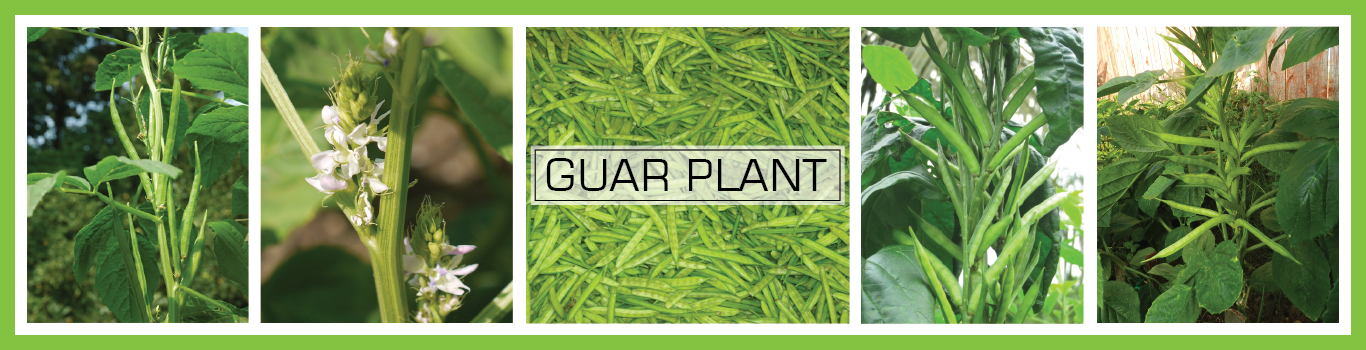
 About Guar Krishi
The origin of Cyamopsis tetragonoloba is unknown, since it has never been found in the wild.It is assumed to have developed from the African species Cyamopsis senegalensis. It was further domesticated in India , where it has been cultivated for many centuries. Guar grows well in semiarid areas, but frequent rainfall is necessary.
This legume is a very valuable plant within a crop rotation cycle, as it lives in symbiosis with nitrogen-fixing bacteria.[3] In fact, agriculturists in semi-arid regions of Rajasthan follow crop-rotation and use guar as a source to replenish the soil with essential fertilizers and nitrogen fixation, before the next crop
News and Highlights
Soil Requirements
Cyamopsis tetragonoloba (L.) can grow on a wide range of different soil types. Preferably in fertile, medium-textured and sandy loam soils that are well-drained because waterlogging decreases plant performance. In respect of soil acidity, guar grows best in moderate alkaline conditions (pH 7-8) and is tolerant of salinity. Thanks to its taproots which are inoculated with rhizobia nodules, it produces nitrogen-rich biomass and improves soil quality.